
CO2 ENGINEERING AND SCIENCE AT SCALE
The LSU CO2 Research Well
INNOVATIVE CO2 RESEARCH, TRAINING, AND TESTING
The LSU Petroleum Engineering Research, Training & Testing (PERTT) Lab’s first-of-its-kind CO2 research well will allow LSU faculty, graduate students, and industry partners to model and study CO2 behavior under industrial conditions—furthering our understanding of CO2 technologies in complex energy systems, supporting the needs of the petrochemical and manufacturing industries, advancing research that supports Louisiana’s energy leadership, and equipping Tigers to lead the future of energy and industry.
FROM THE LAB, FOR THE WORLD
The PERTT Lab is building on its mission of leading the next generation of energy and industrial technology to solve complex, real-world challenges.
The CO2 research well will drive critical research validating existing modeling, testing common behavior associated with industrial-scale operations, and supporting the development of new approaches and technologies for CO2 applications in industrial environments. It’s designed for experimentation in priority areas such as operational safety, transitions between phases, well integrity, sensing and monitoring, technology and tools, well control, and the impacts of operational conditions like heat, impurities, and pressure on CO2 behavior.
6,800+
Feet of Vertical Well Depth
25+
Industry Partners Collaborating to Advance CO2 Research and Innovation
40+
Year Legacy of PERTT Energy Research Leadership
RESEARCH PRIORITIES
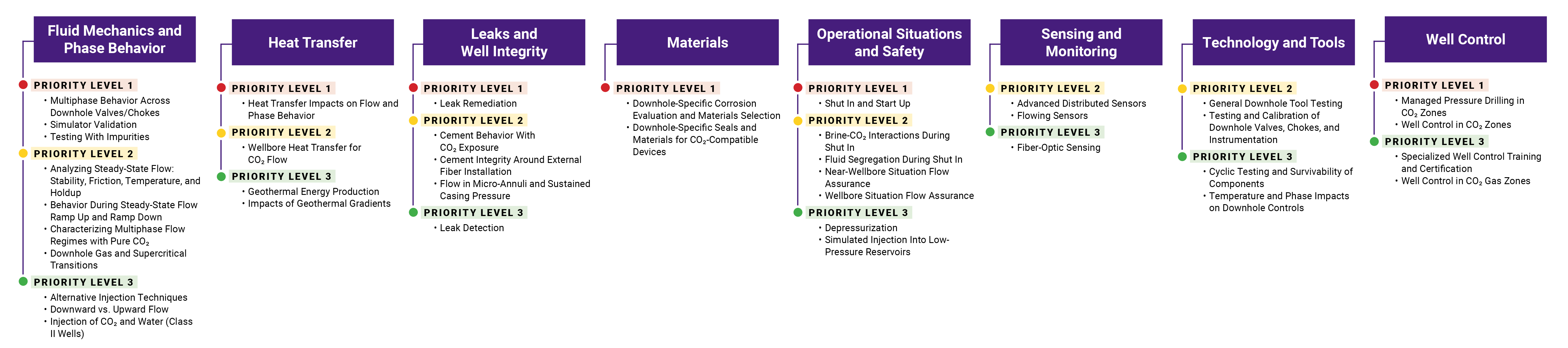
Hands-On Training for Tigers
In addition to its research value, the well will give Tigers hands-on training for their engineering careers by equipping them with industry-relevant skills.
Technical Information About the Well
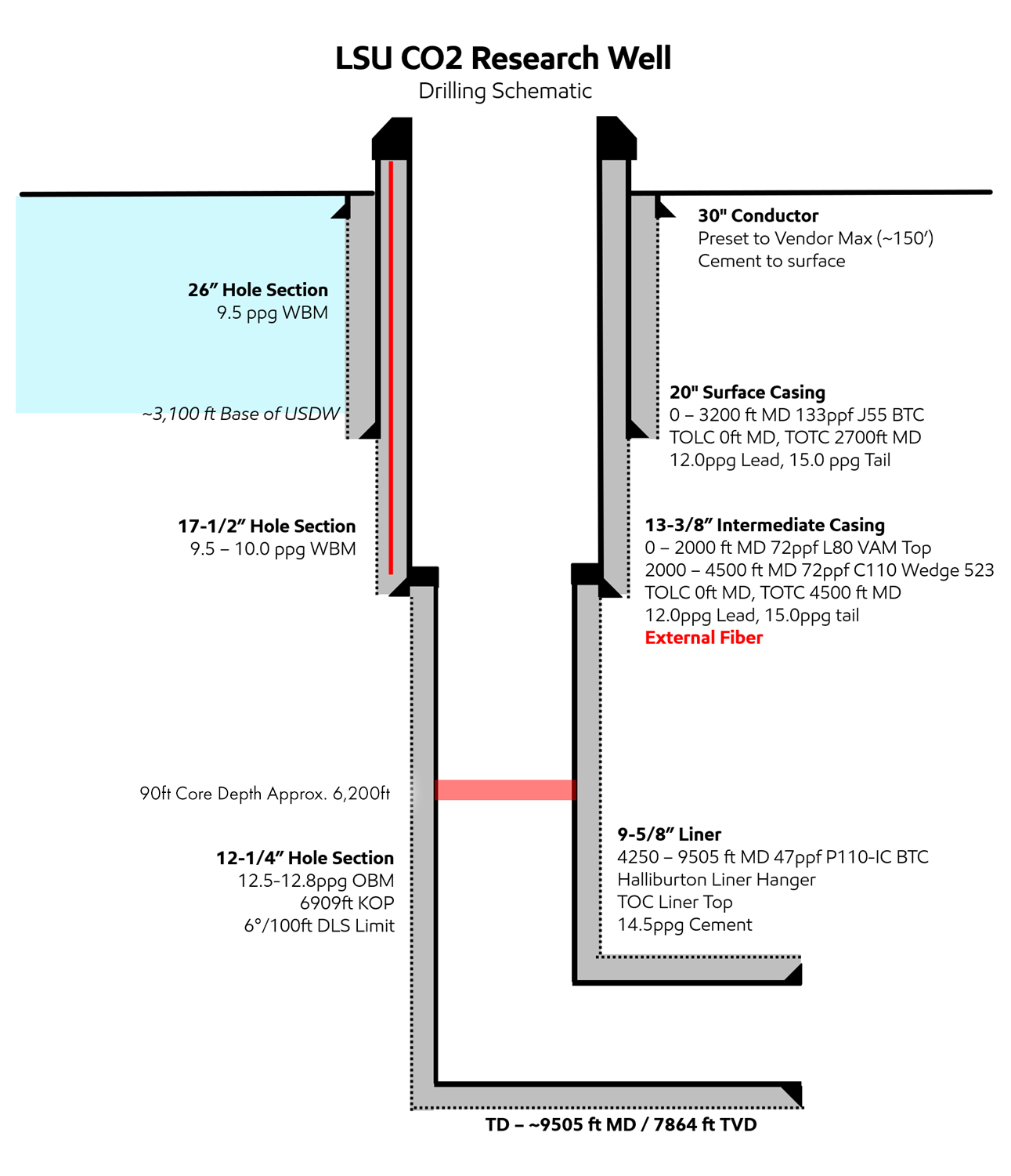 Designed for Safe, Effective Research and Innovation
The research well is designed for testing and experimentation and will include above-ground instrumentation and controls that support research. It will be a completed, non-perforated well—this means it will be drilled to completion, but lack the casing perforations needed to extract or inject fluids into the surrounding geology. The entirety of the well will be cased and cemented, with both 9 5/8-inch and 13 3/8-inch casing diameters installed, depending on vertical depth.
The well will have two main components—a permanent wellbore, completed with carbon steel casing to provide structural integrity and prevent interaction between wellbore fluids and the adjacent geology, and an internal completion that can be reconfigured to support a variety of research needs. Each internal completion will sit inside the permanent well and will generally consist of valves, chokes, instrumentation, and fiber-optic sensors, with each specific design supporting different research needs.
The well will extend approximately 6,800 feet below the surface at the PERTT Lab and will be designed specifically to support applied CO2 technology research and enhanced operational performance through experimentation and data collection. It is not a commercial carbon capture and storage site—nothing will be injected or stored in the ground. The attached schematic summarizes the original design. The final well construction was limited to the vertical section, with the ability to add an eight-in deviated or horizontal section in the future.
Frequently Asked Questions
Click on the accordions below to find answers to common questions.
To maintain its position as a leader within the energy sector, Louisiana must prepare for and adapt to evolving energy and industrial needs. As technologies continue to evolve, this well positions LSU and Louisiana to lead in CO₂ engineering and science research at scale—supporting the dynamic needs of the state's petrochemical and manufacturing industries and attracting industrial investment.
The resulting processes and technology can continue to improve industrial safety for new technologies for both workers and surrounding communities, enhance operational efficiency and profitability, and support continued investment across the state’s energy, industrial, and manufacturing sectors—reinforcing Louisiana’s position as a dominant leader in the global energy marketplace.
The well site is on LSU’s main campus in Baton Rouge, near the soccer fields off Gourrier Drive—providing convenient access for LSU faculty and students.
The research well is supported by funding from the U.S. Economic Development Administration (EDA), Louisiana Economic Development (LED), and state appropriations, along with funding and in-kind support from partners Halliburton, Chevron, Shell, Lemoine, and ExxonMobil.
Industry contributions reflect their commitment to furthering the research and modeling outcomes that will produce solutions to common operational problems; however, the research agenda will be set and led by LSU.
No, the well is not a carbon capture or storage site, and nothing will be injected or stored in the ground.
The well will serve as a research facility for studying CO2 behavior and impurities under realistic industrial conditions—advancing the science needed to ensure at-scale industrial operations can continue to improve safety and efficiency.
Project Partners
This project is made possible through collaborative efforts between LSU, federal and state partners, and industry contributors.
While the project is funded by the Economic Development Administration and Louisiana Economic Development (with additional direct state funding), we have been able to plan a much more ambitious project because of the generous partnerships and contributions of our corporate sponsors.
Sponsors:


Core Partners:



Support Partners:




Participants:



Get involved with the CO2 research well
You can learn more about your interests by taking one of our recommended assessments.
Connect with the Project
If you are interested in opportunities to be part of this project, please contact Professor Karsten Thompson at karsten@lsu.edu.
Participant
Have your branding featured on well materials during construction and beyond by contributing up to $99,000.
Support Partner
Receive embargoed access to certain results and reporting, and branding on well materials during and beyond construction by contributing $100,000 - $499,999.
Core Partners
Become a core partner for field-scale wellbore drilling research to enjoy the benefits of participants and support partners, in addition to exclusive branding and permanent signage on the well and full membership in the kick-off JIP by contributing $500,000 or more.
Stay Informed
Sign up to receive news and updates on the LSU CO2 Research Well.